Key details
- Current owner
- ARCA
- Original owner
- Autobuses Hermanos Barrera
- Year
- 1972
- Registration
- SE-0841-C
- Make
- Sava
- Model
- 5701/1
- Bodywork
- Icas
- Entered service
- 1972
- Withdrawn from service
- 2009
Technical information
- Make
- Sava 5701
- Length
- 5.750 mm
- Height
- —
- Width
- 2.000 mm
- Interior height
- —
- Door width
- —
- Chassis
- Sava 5701/1
- Engine
- four cylinders in line, 3,800 cc and 76 hp at 2,600 rpm
- Engine layout
- front-mounted, naturally aspirated with direct injection
- Gearbox
- five-speed manual
- Steering
- mechanical worm-and-sector system
- Brakes
- hydraulic circuit with compressed-air brake servo
- Suspension
- semi-elliptic leaf springs and shock absorbers on both axles
- Fuel tank
- 77 litres
- Coachbuilder
- Icas
- Entered service
- 1972
- Capacity
- unknown
- Registration
- SE-0841-C
Image gallery
Introduction
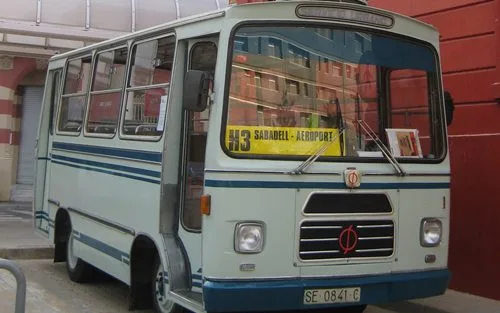
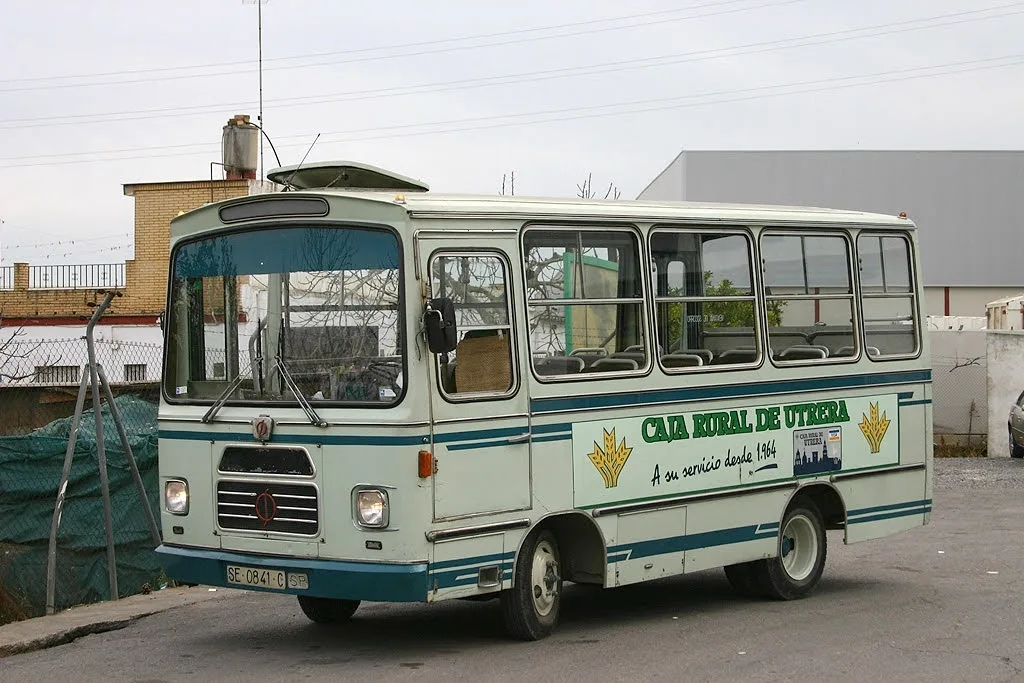
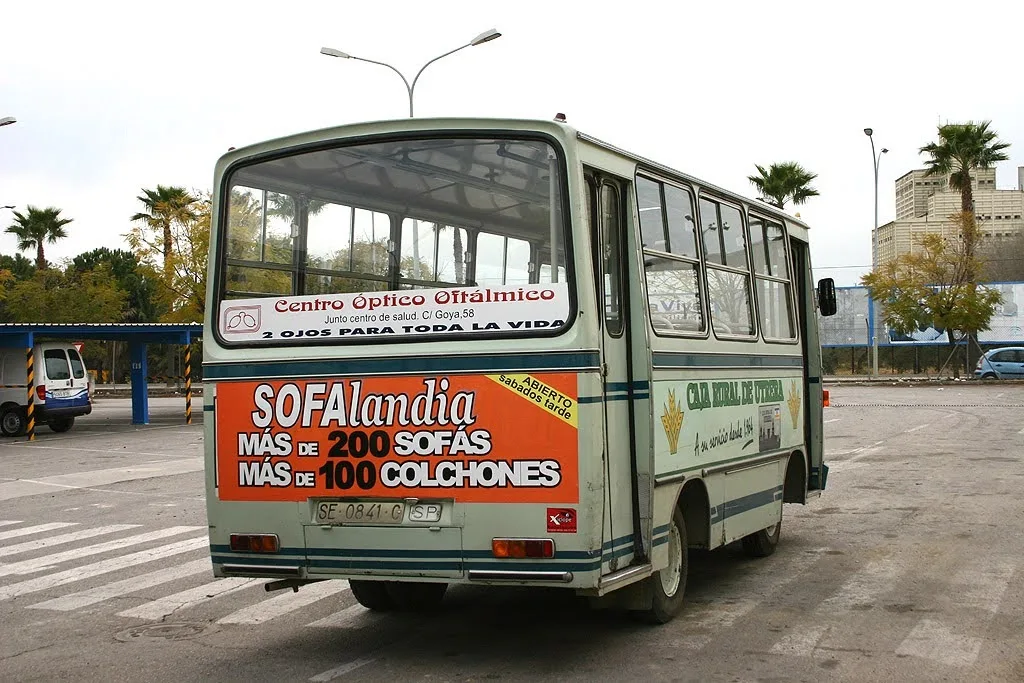
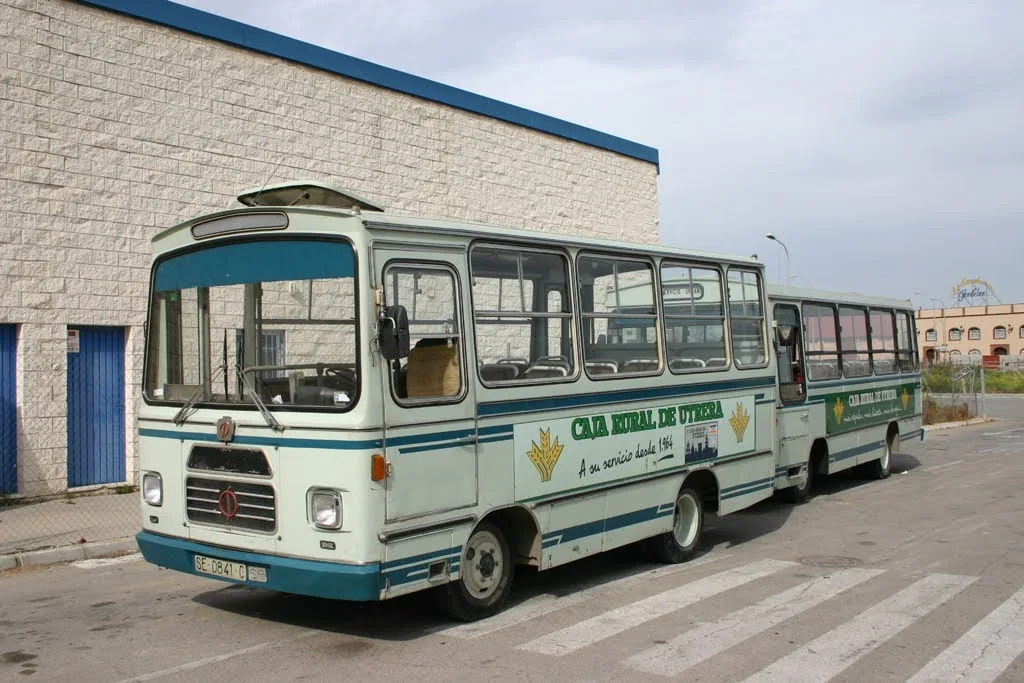
The Sava 5701 is a small 76 hp minibus built in 1972. It was the first vehicle to operate the urban bus service in Utrera, near Seville, run by Autobuses Hermanos Barrera.
Vehicle condition
The vehicle remained in service in Utrera until the end of its working life, which also marked the end of the Barrera brothers’ concession.
When Los Amarillos, part of Grupo Samar, took over the urban service, ARCA decided to preserve the vehicle because of its excellent condition, with the Barrera brothers assisting throughout the arrangements.
History
Utrera’s urban bus service began in 1972 and was operated by the company founded by brothers Manuel and Antonio Barrera, Autobuses Hermanos Barrera.
The company’s first three vehicles were Sava 5701 minibuses with Icas bodywork. The first, purchased in 1972, became fleet number 1 and was registered SE-0841-C. Number 2, registered SE-9835-D, joined in 1973 and differed both externally —with a smaller grille and larger front destination display— and internally, with different light fittings. The third vehicle arrived in 1975 as fleet number 3, registered SE-4185-H, and featured a more sensibly proportioned front destination display.
Passengers entered through two pneumatically operated doors at the front and rear. The original padded double seats were replaced during the vehicles’ working lives by the familiar wood-effect seats manufactured by Vera de Bidasoa.
Fleet number 4, registered SE-1042-X, was a higher-capacity Sava-Pegaso 5720 with Unicar U-75 bodywork acquired from Seville’s urban service, where it had operated as Tussam 180.
The company also acquired three Sava 5701 vehicles with Unicar Arosa bodywork, initially as sources of spare parts. All three came from the Carmona urban service, although two —SE-8696-I and SE-8694-I— had originally operated in Seville as Tussam 144 and 145 respectively.
From 2007, the local council and the Barrera brothers negotiated the transfer of the concession. It was eventually taken over by Los Amarillos, part of Grupo Samar, in February 2009.
Because the fleet was maintained in full working order until its final day, two Sava 5701 minibuses could be preserved: number 1 by ARCA and number 3, initially by Utrera Town Council. Sava-Pegaso 5720 number 4 was also saved privately by José Burgos, José María Martínez and Josep Pretel.
ARCA thanks the Barrera brothers for their assistance throughout the preservation arrangements.