Key details
- Current owners
- José María Martínez, José Burgos and Josep Pretel (Team JJJ)
- Original owner
- not recorded
- Year
- 1982
- Registration
- SE-1042-X
- Make
- Pegaso-Sava
- Model
- 5720
- Bodywork
- Unicar U-75
- Entered service
- 1982
- Withdrawn from service
- not recorded
Technical information
- Chassis
- Pegaso-Sava 5720
- Engine
- rear-mounted vertical Pegaso 9042/11, four cylinders in line and 4,370 cc
- Power
- 85 hp at 2,400 rpm
- Maximum torque
- 28.9 mkg at 1,600 rpm
- Fuel system
- naturally aspirated with direct injection
- Gearbox
- five-speed synchromesh manual
- Clutch
- hydraulically operated dry single plate
- Steering
- mechanical with hydraulic power assistance
- Suspension
- semi-elliptic leaf springs and shock absorbers on both axles
- Coachbuilder
- Unicar U-75
- Fuel tank
- 113 litres
- Entered service
- 1982
- Fleet number
- not recorded
- Capacity
- not recorded
- Registration
- SE-1042-X
Image gallery
Introduction
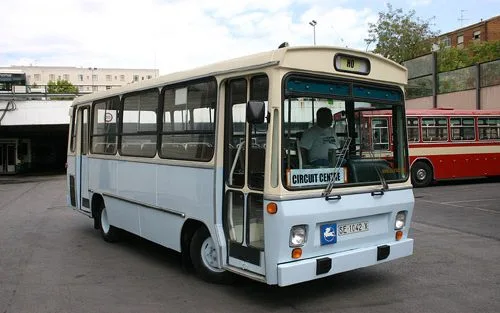
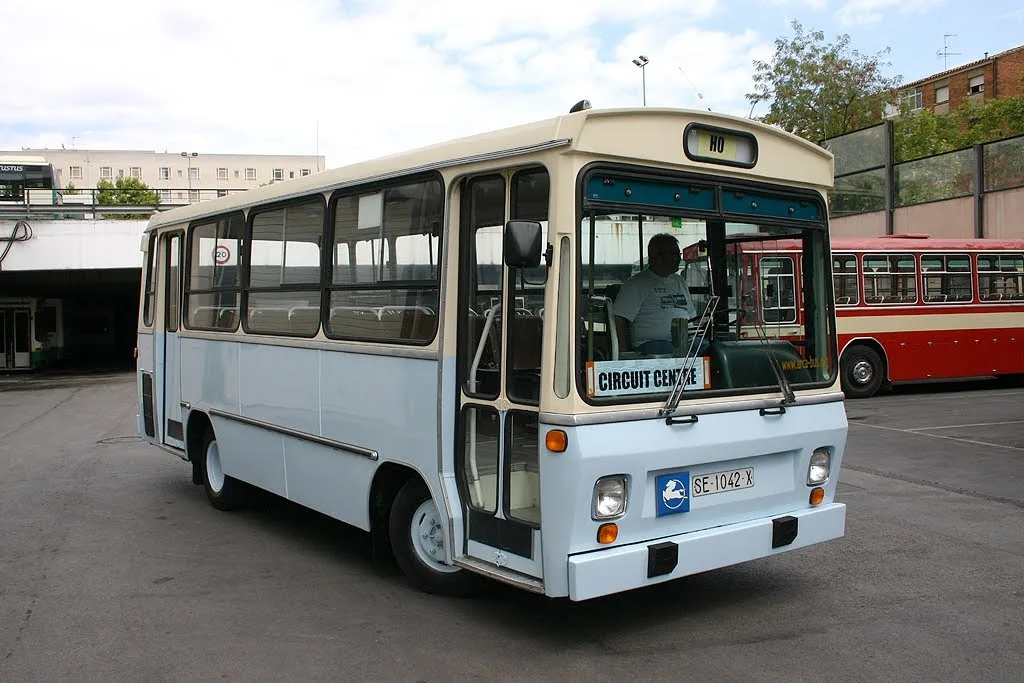
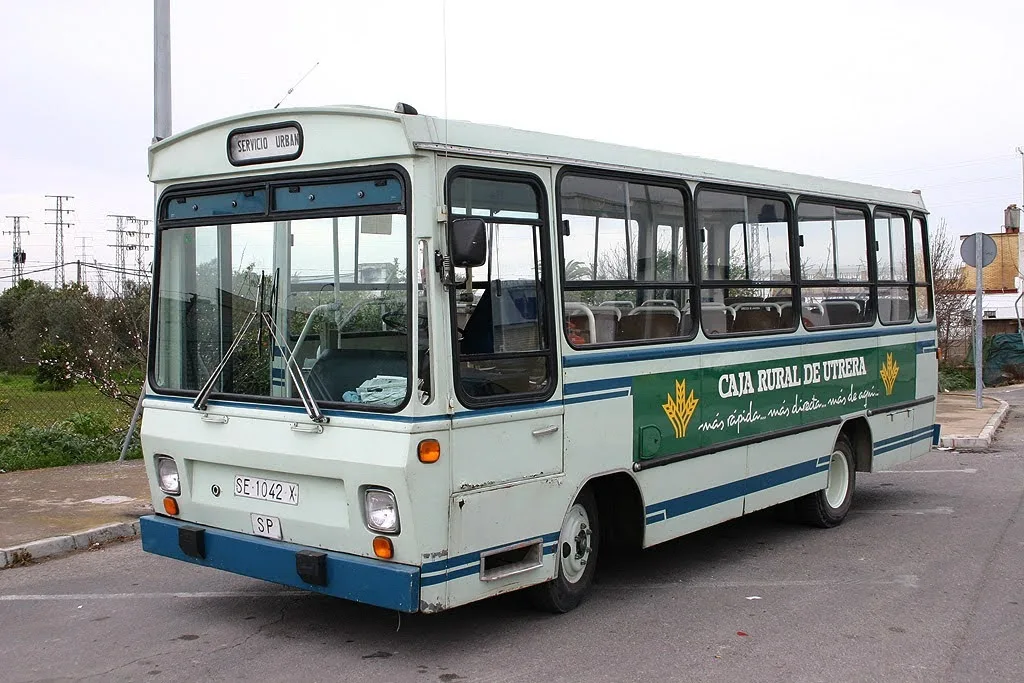
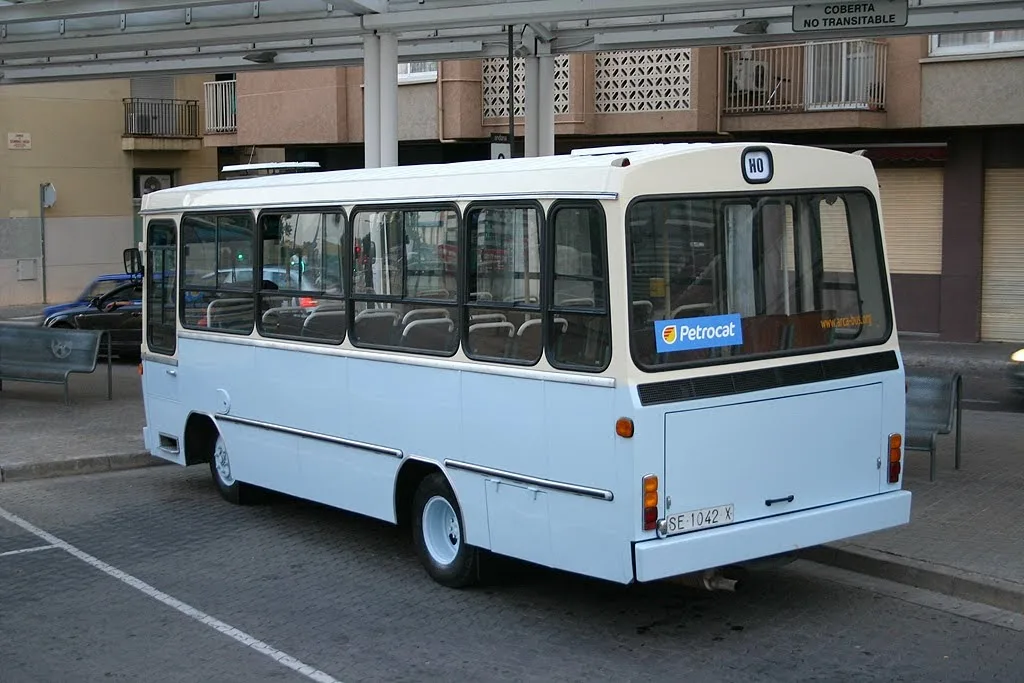
The Pegaso-Sava 5720 “Savita” is a minibus built in 1982 on a Pegaso-Sava 5720 chassis with Unicar U-75 bodywork. Its compact dimensions made it especially suitable for lightly used urban routes, narrow streets and roads difficult for a conventional bus.
The preserved vehicle is registered SE-1042-X. It first operated in Seville and later in Utrera, where it became fleet number 4 with Autobuses Hermanos Barrera.
Vehicle condition
After preservation, Team JJJ worked to recover the vehicle’s appearance and ensure its continued care. “Savita” forms part of the collection associated with ARCA and has participated in historic transport preservation events.
It is currently undergoing maintenance. Its preservation illustrates both the development of the light Pegaso-Sava range and the role played by minibuses in the urban networks of medium-sized towns.
History
After ENASA completed its takeover of SAVA in 1968, the Valladolid factory specialised in light and medium vehicles for both goods and passenger transport. Minibuses produced during this period formed part of the 5700 range and were marketed under the Pegaso-Sava name.
One of the most successful members of the family was the 5720, introduced from 1973 and designed mainly for urban service. It was sold as a chassis for bodying, allowing it to be adapted to different requirements and fitted with bodywork from various manufacturers.
The Pegaso-Sava 5720 had a vertically mounted rear engine. This layout facilitated passenger access through the front door and reduced vibration, noise and fumes in the saloon. Its Pegaso 9042/11 four-cylinder, 4,370 cc engine produced 85 hp and drove through a five-speed synchromesh manual gearbox. The Unicar U-75 body made efficient use of the compact dimensions to provide good capacity for urban work.
Although one of the largest fleets operated in Madrid, the model also served in other Spanish towns and cities. The vehicle preserved within the ARCA community did not come from Madrid: its history is linked to Seville and Utrera.
SE-1042-X first operated on Seville’s urban network as TUSSAM fleet number 180. Autobuses Hermanos Barrera later acquired it for the Utrera urban service, where it became fleet number 4 and supplemented the three Sava 5701 minibuses already in use.
Its greater capacity compared with the Sava 5701 allowed it to reinforce services and cover journeys with higher demand. Its Unicar U-75 bodywork and urban layout suited the needs of a local network such as Utrera’s.
When the urban concession passed to another operator, the fleet’s good condition allowed several vehicles to be saved. The Pegaso-Sava 5720 was privately preserved by ARCA members José María Martínez, José Burgos and Josep Pretel, known collectively as Team JJJ.